
Plan, Play, Celebrate: A Piano Teacher’s Guide to Holiday Repertoire for Every Student Level

Guest author: Jennifer Eklund, composer, educator, and Musicnotes Signature Artist
How to plan your holiday recitals? Practical tips, inclusive options, and music recommendations for first year piano students and beyond.
In this guide we will cover:
- Tips on how to begin planning recitals & concerts, timelines, preferences & what type of music & more
- Top repertoire selections for Year 1 (beginner)
- Top repertoire selections for Year 2-3
[Looking for Halloween specific music? Skip to my Halloween Recital Guide ]
The holiday season can be one of the most rewarding times in a piano studio, but it also arrives during an especially busy part of the year. Teachers are balancing new beginners, schedule changes, school activities, exams, and family travel while preparing students for holiday performances.
Successful holiday recital/concert programming is about more than assigning standard arrangements. It is an opportunity to celebrate diverse traditions, spark student enthusiasm, and showcase technical growth without overwhelming your schedule or your students. With a thoughtful plan, seasonal preparation can become a joyful experience for the entire studio.
1. Respect family preferences and offer inclusive options
Before assigning seasonal pieces, ask families about their preferences . Some students celebrate specific religious holidays, while others may prefer secular winter themes, folk melodies, jazz arrangements, more traditional Christmas, Hanukkah themed, or neutral classical works such as Tchaikovsky’s The Nutcracker.
Offering flexible choices helps every student feel comfortable and enthusiastic about participating. Consider including:
- Traditional religious selections
- Secular holiday songs
- Winter folk melodies
- Contemporary pop arrangements
- Cinematic seasonal themes
- Classical works associated with the season
2. Assign music six to eight weeks early
Introduce holiday repertoire well ahead of performance dates. Assigning music six to eight weeks early gives students time to master the notes and polish their expression before the peak of end-of-year school events, exams, and family travel.
Early planning also gives you time to change a piece if it turns out to be too difficult, too easy, or simply not the right fit.
A practical schedule might look like this:
3. Align song selection to student’s level & preferences
Holiday music should be fast to learn and fun to play. Assigning pieces slightly below a student’s maximum sight-reading capacity gives them room to build confidence, polish phrasing, and perform comfortably during a busy season.
A piece does not need to be technically difficult to sound full and expressive. Accessible arrangements often allow students to focus on musical details rather than simply getting through the notes.
Keep practice engaging by varying the musical landscape. Combine traditional melodies with contemporary pop, cinematic arrangements, bluesy winter grooves, or classical seasonal pieces.
This gives students the chance to explore different musical styles while helping your studio program appeal to a broad range of interests and traditions.
Also keep things interesting with duets and trios. These help students develop steady rhythm, active listening, and dynamic balance while creating a fuller, more engaging performance. Playing with a peer or teacher can also ease recital nerves, build studio community, and boost student confidence.
4. Align repertoire with pedagogical goals
Seasonal pieces can support your curriculum rather than interrupt it. Use holiday selections to reinforce skills such as:
- Balance between the hands
- Melody and accompaniment
- Pedaling
- Hand-position changes
- Syncopation and complex rhythm patterns
- Articulation and contrasting touch
- Dynamic shaping and phrasing
5. Prevent decision fatigue with curated choices
Students enjoy having a say in what they play, but too many options can become overwhelming. Present two or three pieces tailored to each student’s skill level and goals. This gives students meaningful ownership while ensuring every option fits your pedagogical plan.
Tip! When working with younger students I find it most effective to have a few choices pre-selected and then offer a choice to students. This helps stave off decision fatigue yet still allows the student to be part of the "picking" process. For more advanced players, half the fun is "finding" the right piece so as students become more advanced. I encourage teachers to allow the students more control in the choosing process (within limits since students sometimes have eyes and ears for pieces that are beyond their level).
Year 1 Holiday Songbooks (Beginner Level)
These holiday books feature a blend of both traditional carols and secular seasonal selections to suit every student in your studio. Keep in mind my songbooks can be found in two formats on Musicnotes.com: As Collections, where you can download curated collections of individual arrangements as PDF’s, and Digital Books which is a cover to cover music book available digitally, featuring curated arrangements based on specific themes. I find both as a really great value for money when working with multiple students, offering a variety of arrangements, and also re-usable year after year.
First Christmas Pop Solos (4 Volumes)
- Target Level: Beginner (5 finger pattern solos).
- Instrumentation: Student Piano Solo with Intermediate Teacher Duet.
- Pedagogical Focus: Adapts popular holiday and winter pop hits into accessible, hand friendly 5 finger arrangements. The lush duet accompaniments allow first year students to experience rich harmonies and rhythmic drive during performances.
First Christmas Solos, Digital Music Book
- Multi-Key Exploration: Introduces melodies across various hand placements and keys without overcomplicating staff reading.
- Triple Teaching Modality: Flexible design that allows teachers to introduce music via note reading, rote learning, or finger numbers, accommodating diverse learning styles.
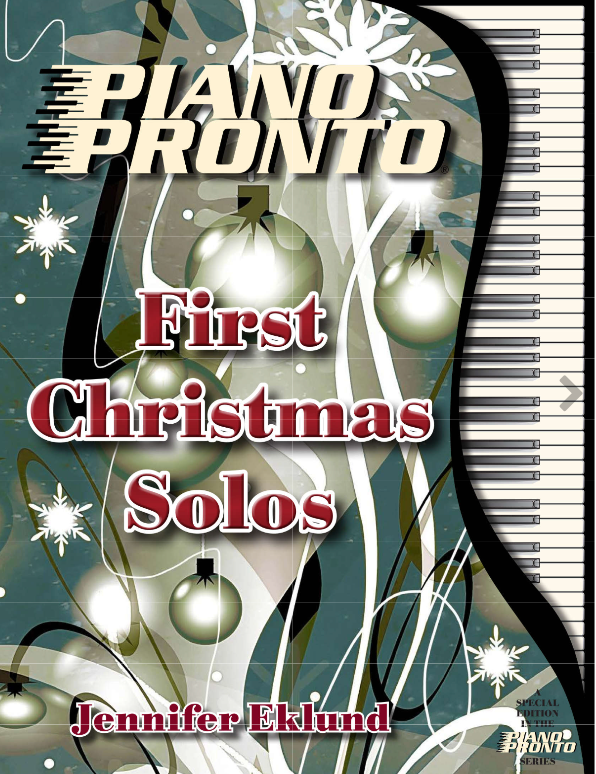
Single Staff Presentation: Utilizes a clean single staff layout to minimize visual clutter and avoid grand-staff reading overload for early beginners.
Holiday Classics (Multi-Level Songbook)
- Three-in-One Structure: Features ten holiday selections, each presented in three distinct, progressively challenging versions within the same collection.
- Multi-Year Utility: Designed for students to "grow into" over consecutive holiday seasons—starting with Version 1 in year one and leveling up in subsequent years.
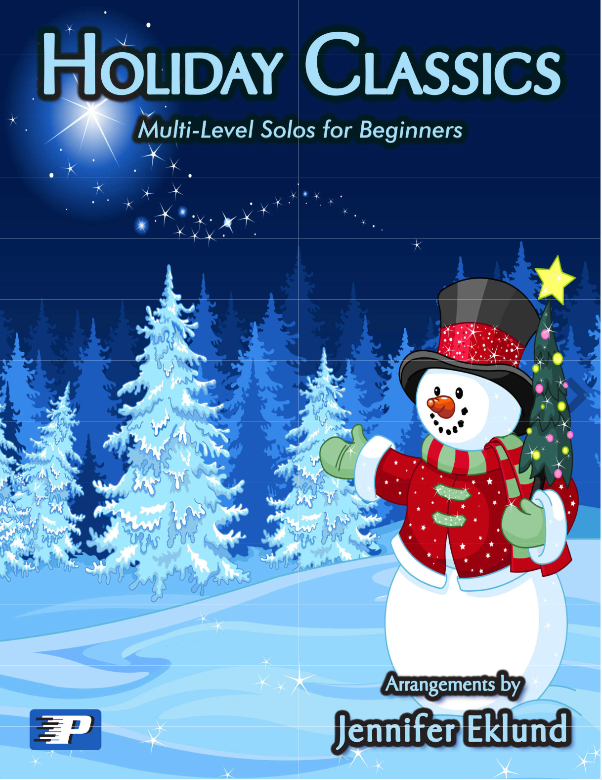
Difficulty Range: Multi-Level (Early Primer through Late Beginner).
Year 1 Holiday Repertoire, individual arrangements (Beginner Level)
- "Joy to the World", Beginner
- "The Little Drummer Boy", Beginner
- "Silent Night", Beginner
- "Jingle Bells", Beginner
- "Do You Hear What I Hear?", Beginner
To explore more holiday pieces, search my catalog here
For more advanced students, check out holiday repertoire selections for Year 2-3

Jennifer Eklund is a composer, music educator, and Musicnotes Signature Artist known for creating engaging piano music for students of all levels. Her teaching-focused repertoire combines strong musical foundations with imaginative themes, expressive textures, and approachable technical challenges.